Guide
What Do Mahjong Tiles Mean? A Complete Guide to All 34 Symbols
Published July 16, 2026
Matching two tiles in Mahjong Solitaire doesn't require knowing what either one means — a Red Dragon matches a Red Dragon whether or not you know it's called a Red Dragon at all. But most players get curious sooner or later about what's actually printed on the tiles they've been clearing by the hundred. Here's what every symbol in the 34-tile set actually represents, where it comes from, and — since the site gets asked this a lot — what's not in this tile set that some players expect to find.
The Three Numbered Suits (27 Tiles)
Every Mahjong set is built around three suits, each numbered 1 through 9 — 27 tiles in total, four copies of each.
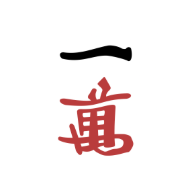
Characters (萬, Man). The simplest of the three: a Chinese numeral stacked above the character 萬, meaning "ten thousand." The suit's name comes from Mahjong's roots in a money-based card game, where these represented units of currency.
Circles (筒, Pin). Stacks of stylized rings, an artistic descendant of old Chinese coins, which were minted with a square hole through the center. The number of rings on the tile matches its value.
Bamboos (條, Sou). Numbers 2 through 9 show stacked green bamboo stalks, exactly what the name promises. The 1 tile is the odd one out — it almost always breaks the pattern entirely and shows a bird instead, usually styled like a sparrow or a peacock. It's a design convention that's over a century old, and this site's tile art keeps it too.

Winds and Dragons (7 Tiles)
Alongside the three numbered suits sit seven "honor" tiles — four Winds and three Dragons — with no numbers at all, just a single symbol.
The four Winds are named for the compass: East, South, West, and North. In classical Chinese cosmology each direction is also paired with a season, an element, and a color — East with spring, wood, and green; South with summer, fire, and red; West with autumn, metal, and white; North with winter, water, and black.
The three Dragons carry their own meanings. The Red Dragon (中, zhōng, "center") is tied to success, power, and good fortune. The Green Dragon (發, fā, "to emit" or "to prosper") represents prosperity and wealth. The White Dragon is the odd one out — it's traditionally left blank, or marked only with a plain border, standing for purity or an empty slate.

What About Flower and Season Tiles?
If you've played other Mahjong games, you may be expecting eight more tiles here — four Season tiles (spring, summer, fall, winter) and four Flower tiles representing the "Four Gentlemen" of Chinese art: plum blossom, orchid, bamboo, and chrysanthemum, each standing for a virtue prized in Confucian tradition. In real Mahjong these are bonus tiles, set aside from the normal hand and worth extra points on their own.
This site's tile set doesn't include them. Every board here is built from exactly the 34 tiles covered above — the three numbered suits plus the seven honors — and nothing else. Some other Mahjong Solitaire implementations do add Flower and Season tiles as extra matchable pairs, which is worth knowing if you've bounced here from one of those and were expecting to see them.
Frequently Asked Questions
Why is the 1 Bamboo tile a bird instead of bamboo?
It's a long-running art convention in Mahjong tile design — 2 through 9 Bamboo show stacked bamboo stalks, but 1 Bamboo almost always breaks the pattern and shows a bird instead, usually styled like a sparrow or peacock. Tile sets have kept the convention for over a century, and this site's tile art follows it too.
What does the Red Dragon tile mean?
The Red Dragon tile shows 中 (zhōng), meaning "center" or "middle." It's traditionally associated with success, power, and good fortune.
Does knowing what Mahjong tiles mean help you win Mahjong Solitaire?
No. Matching in Mahjong Solitaire is based purely on two tiles sharing an identical face — a Red Dragon only matches another Red Dragon, never a Green Dragon or a Wind tile, regardless of what either symbol means. The meanings are cultural background, not gameplay rules.
Does this site's Mahjong Solitaire include Flower and Season tiles?
No. This site's board is built from only the 34 standard tiles — the three numbered suits, the four Winds, and the three Dragons. Flower and Season tiles are a real-Mahjong feature that some other Mahjong Solitaire implementations add as extra matchable pairs, but they aren't part of this site's tile set.
Are the four Wind tiles ranked in Mahjong Solitaire?
No. In real Mahjong, the round and seat winds affect scoring and hand value. In Mahjong Solitaire there's no ranking at all — East, South, West, and North are just four more faces to match, exactly like any numbered suit tile.
More Guides
-
How to Play Mahjong Solitaire: A Complete Beginner's Guide
The matching rules from scratch, a full tile glossary, and six strategy tips.
-
Mahjong Solitaire Board Layouts, Compared
Standard, Fortress, Two Hills, Waves, Stairs, and Ziggurat — what each one looks like and how long it takes to clear.
-
The History of Mahjong Solitaire
From a 1981 PLATO terminal to Shanghai, Taipei, Mahjong Titan, and the game you're playing now.