
Guide
Mahjong Solitaire Board Layouts, Ranked from Easiest to Hardest
Published July 13, 2026
Level mode climbs through ten hand-designed board shapes before it loops back to the first one, and the difference between the first and the last is bigger than the tile counts alone suggest. It's not just that later boards have more tiles — it's how those tiles are arranged: how many layers deep the stack goes, how much of the board stays boxed in versus wide open, whether the shape rewards a quick scan or punishes one. Tile count is still the best single predictor of difficulty (it's literally the order the game itself cycles through them in), but it doesn't tell the whole story. Here's what each one actually looks like, and what it's like to sit down and play it. The photo on each entry is a real screenshot of that exact board, not a stock illustration.
Level Mode, in Order
-
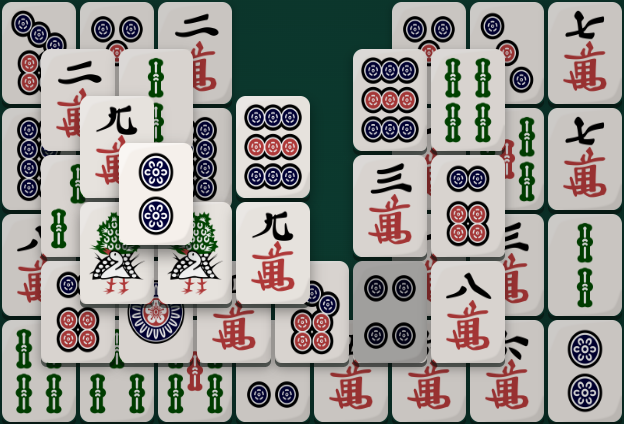
1. Twin Peaks — 46 tiles
The gentlest board: two low mounds joined at the base. Most tiles are only one or two layers deep, so very little stays hidden for long — a good board for learning to read blocked-vs-free at a glance.
-
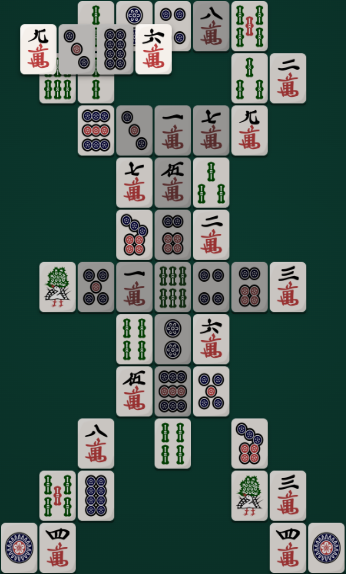
2. Anchor — 48 tiles
A ring with a shaft and crossbar through the middle. Only 2 layers deep, so almost nothing is covered from above — the difficulty here is entirely about the ring shape boxing tiles in from the sides.
-
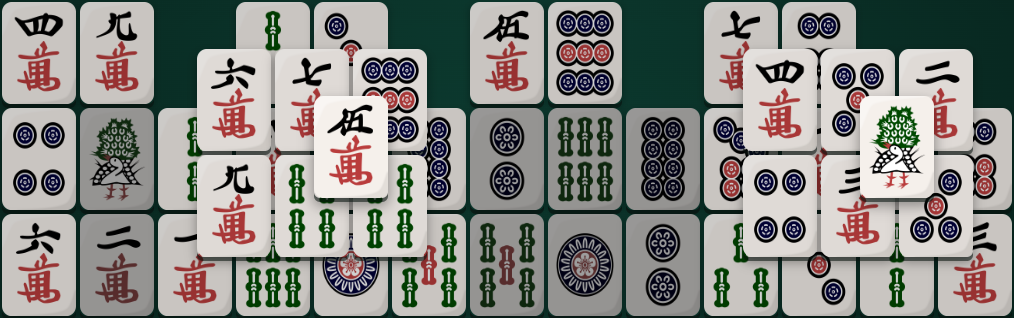
3. Great Wall — 48 tiles
A long, wide rampart with two watchtowers, spread horizontally rather than tapering to a peak. It rewards scanning the full width of the board instead of focusing on one central stack.
-
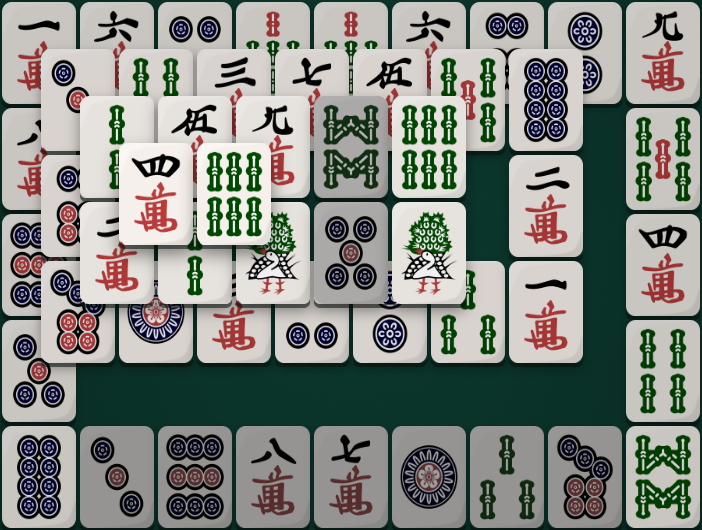
4. Fortress — 52 tiles
Concentric square walls with a hollow moat between them. The gap in the middle means fewer tiles overlap each other than you'd expect from the tile count, but the outer wall stays blocked longest.
-
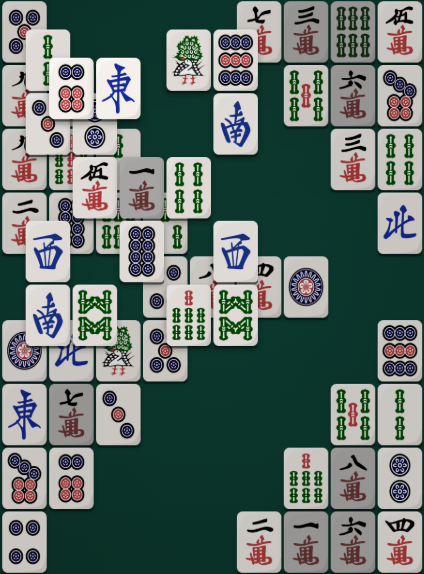
5. Windmill — 62 tiles
Four blades sweeping clockwise on the base layer, with a smaller layer above sweeping the opposite way. The counter-rotation means a tile that looks boxed in on one layer often has its blocker sitting at an angle on the layer above — worth double-checking before you assume something's stuck.
-
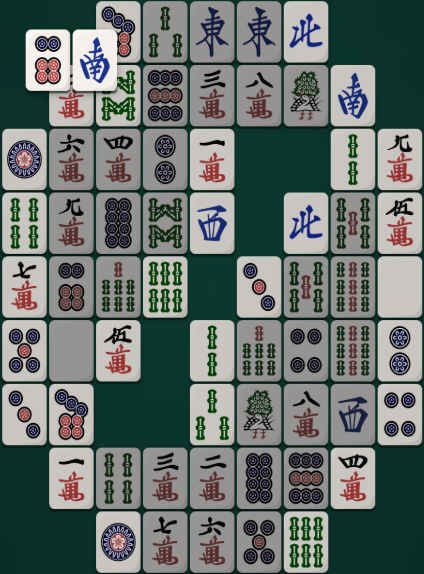
6. Yin-Yang — 64 tiles
A filled disc cut by a lazy S-curve, only 2 layers deep despite the tile count. Almost every tile is reachable from above — the S-curve slit is what creates most of the blocking.
-
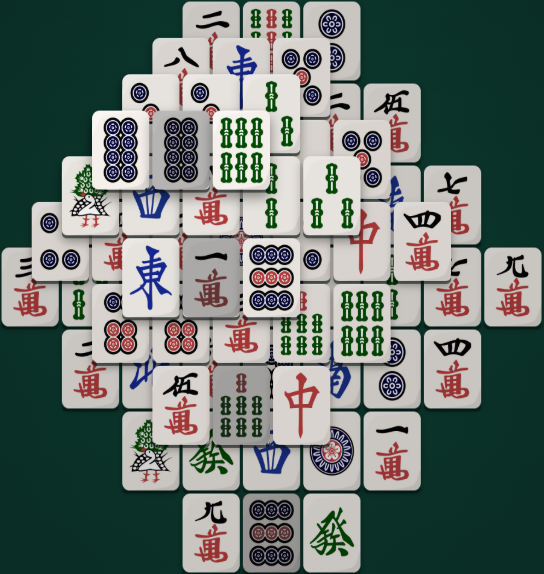
7. Diamond — 76 tiles
A clean rhombus tapering evenly to a 3-tile cap. The symmetry makes it easier to predict what a match will open up next, but the taper concentrates a lot of tiles into the deepest, most-covered layers.
-
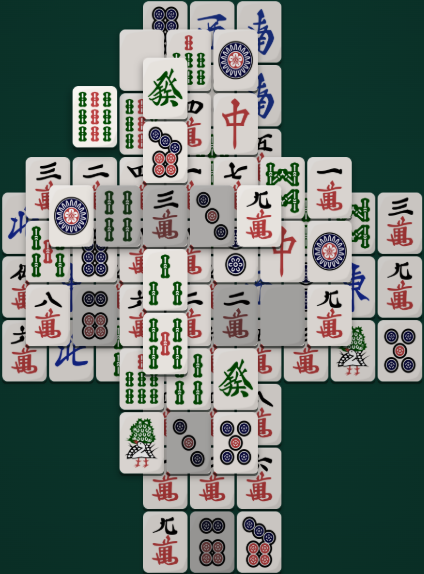
8. Cross — 88 tiles
A thick plus-sign, four arms meeting at a dense center. The center overlaps tiles from all four arms at once, so it tends to stay locked the longest — clear the arms first rather than fighting the middle early.
-
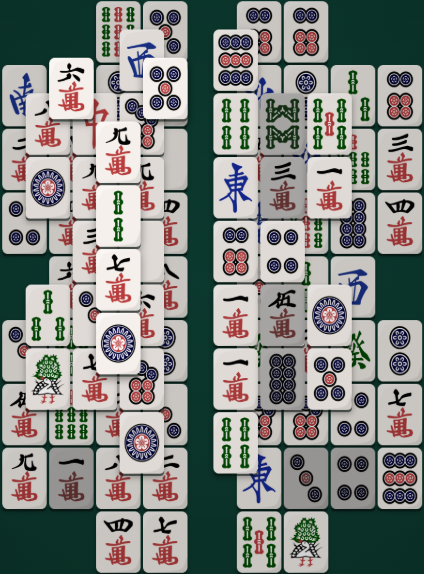
9. Butterfly — 100 tiles
Two wing pairs tapering to a narrow waist. At 100 tiles spread across just 3 layers, each layer is packed wide and dense — you're tracking a lot of simultaneously-free tiles rather than digging through deep stacks.
-
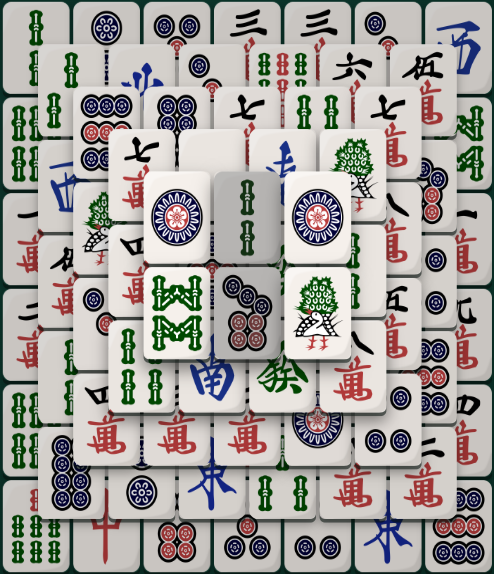
10. Classic Pyramid — 110 tiles
The finale: the largest tile count and the deepest stack in the rotation, a straightforward rectangular taper from a 7×6 base up to a single capstone. Nothing tricky about the shape itself — it's simply the most tiles and the most layers of blocking to read through at once.
Express Mode: 3 Smaller Layouts
Express doesn't progress through a sequence — each round picks one of these 3 shapes at random, sized for a round you can clear in a couple of minutes.
-
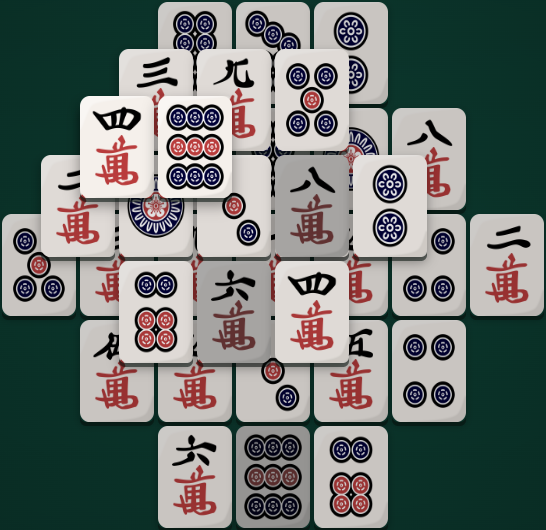
Spark — 36 tiles
The smallest board in the game, a tight diamond-like burst. Small enough to take in at a single glance before your first move.
-
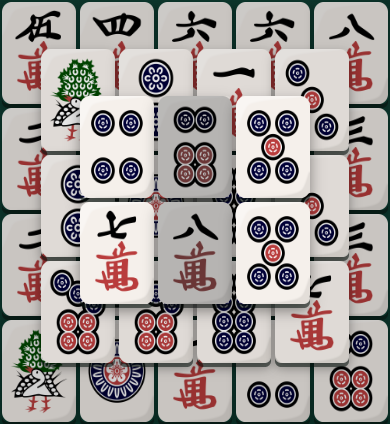
Nugget — 38 tiles
A compact rectangular taper — essentially a miniature Classic Pyramid, scaled down to Express size.
-
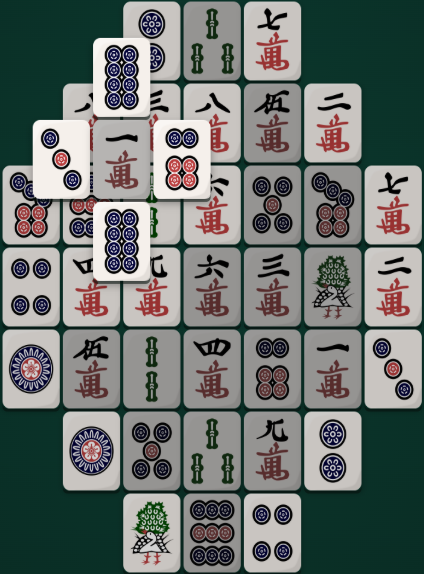
Coin — 42 tiles
The largest Express shape, but only 2 layers deep — like Anchor and Yin-Yang above, the challenge is almost entirely lateral rather than about digging through cover.
New to the rules themselves rather than the shapes? Start with the complete beginner's guide.
More Guides
-
How to Play Mahjong Solitaire: A Complete Beginner's Guide
The matching rules from scratch, a full tile glossary, and six strategy tips.
-
Mahjong Solitaire Stuck? What "No More Moves" Means
Why boards get stuck, why every board here is guaranteed solvable, and when to reach for Shuffle, Undo, or Hint.